
About
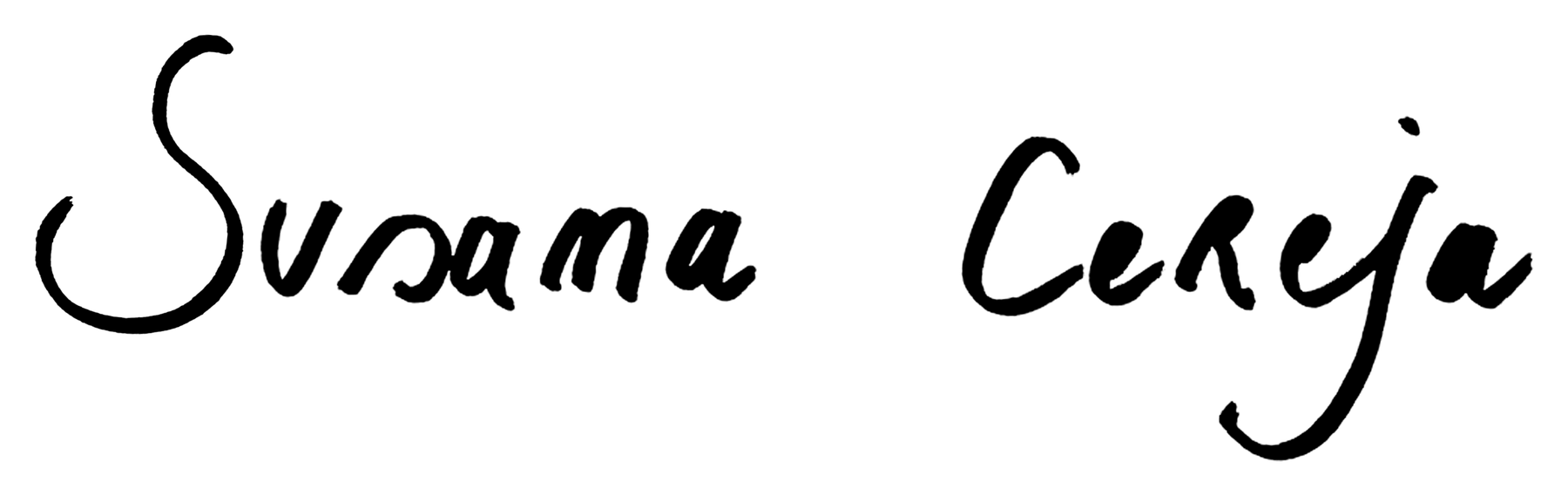
Susana Cereja
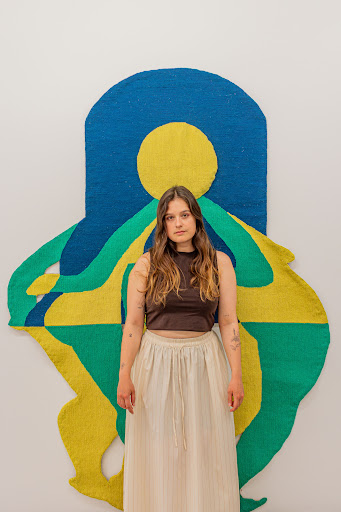
Portuguese contemporary visual artist. With textile as the foundation of her practice, she works across tapestry, sculpture, installation and public space, exploring femininity, territory, memory and belonging.
Biography
Susana Cereja (Mafra, Portugal, 1992) is a Portuguese contemporary visual artist. With textile as a foundation, her practice explores femininity, territory, memory and belonging. Her work moves across tapestry, sculpture, installation and public space, ranging in scale from studio-based works to large-scale interventions in public space.
The Arraiolos stitch holds a central place in her research, not only as a technique but as a material language. Through scale, structure and its relationship with space, textile takes on different forms and enters into dialogue with other materials and modes of construction.
These languages develop in parallel, with textile remaining the foundation of the practice. Alongside her studio work, Cereja develops projects for public space, artistic residencies and collaborative, intergenerational processes in which making can also become a site of encounter, transmission and belonging.
Her work has been presented in solo and group exhibitions, art fairs and international contexts, reflecting a practice shaped by material research, scale and a sustained relationship with place.
Her academic path began in Architecture in Lisbon, including a brief period in Germany. In parallel, she developed her practice in drawing, illustration and printmaking at the Faculty of Fine Arts in Lisbon and at Ar.Co — Centre for Art and Visual Communication.
During her studies, she began her professional career at the studio of artist Joana Vasconcelos, where she worked for five years. She now maintains her studio on the outskirts of Lisbon, where she develops and produces her work.
Recent record
All exhibitionsSolo exhibitions
Group exhibitions & fairs
Projects & residencies
Studio team
The practice is supported by a small studio team, closely involved across the different stages of the work.